I’m learning so much from making YouTube videos about working in the studio. Minor thing number one is that I had no idea that making videos is hard. Forget making a good one–it took me a month to make one that I wasn’t embarrassed to watch alone in the basement.
Minor thing number two was the shock everyone probably goes through of finding out what they look and sound like. I had no idea that I sound like Jim Parsons and move like a bear that emerged from hibernation a couple of months early. It explained a lot of little things in my life, like why people look so alarmed when I roller skate.
But I’ve also learned something important. The camera completely changes how I act. Does it do that to everyone, I wonder? It’s made me aware of what a hypocrite I am when it comes to shop safety. If I find myself doing some obviously dumb-ass thing when the camera is running, I’ll realize that I can’t possibly let a viewer see that bad example and I stop. You’d think the self-evident dumb-assness itself would suffice, but clearly it is invalidating the footage that tips the scale. What am I, a twelve year old?
I think I’d be a much better person if a drone followed me around 24×7 filming me. Apparently, knowing that you’re being watched, even by a machine, promotes mindfulness.
Safety First?
It’s not as if I’m a stranger to shop safety. It used to be my job.
I used to run the shop at the Corcoran School of Art. It was the best gig ever–the job description was basically “Help them make whatever crazy thing they can dream up and please don’t let anyone get maimed or killed.” We made some amazing stuff, but that last part aged a person. It wasn’t like now. It was the 1970’s. OSHA was brand new and a lot of work safety was still folklore that was only beginning to filter out to artists, many of whom are not instinctive rule followers to start with.

The students were all technically adults. The youngest were college age and half of them were middle aged or retired people going to art school part time. Yet the mayhem was unrelenting, like wrangling a kitchen full of toddlers while trying to make Thanksgiving dinner. While you’re snatching a knife from toddler A, toddler B is trying to work a serving fork into an electric outlet, and toddler C is under the sink trying to figure out how to get the cap off of a bottle of Drano.
No matter how many times you warned them, people were always setting their pants on fire with the oxy-acetylene rig or the arc-welder, oblivious behind their masks to the flames licking up their leg. One student did it five times. It sounds funny but you can’t just fling a bucket of water at someone who’s using 100 amps or a gas torch that can slice through three inches of steel. A student going up in flames is an urgent matter to be sure, but you don’t want to scare them into dropping the lit torch onto the coiled gas hoses or whipping around and poking the welding stick in your eye. It’s delicate.
You could drill people on the obvious, such as goggles and masks or how to use the table saw safely; the real problem was the creative stuff that you didn’t see coming. One day I stopped a student in the act of sliding a cinderblock down the table of a 10″ jointer. I’m still kind of curious about what would have happened if I hadn’t turned around.
I think one incident actually scarred me permanently. I stepped out to the yard where a young man was carving a life-size Labrador retriever in wood. He was bent over a walnut log mounted knee-high, delicately eroding the wood with a chain saw. Nothing wrong with that, but his attention was riveted on the place where the chain blade met the wood, and he didn’t notice that his necktie was dangling straight down, gently bouncing off the chain as he worked.
Time stopped. I could see every possible outcome at once, like one of those quantum cat things. To yell a warning might have made him turn his head, possibly for the very last time if should it cause the chain to grab the tie. Yet to do nothing was untenable. I can still see the flying chain gently tapping his plaid necktie away, the tie wafting back to be tapped again and again, and me frozen, afraid to even move lest I catch his eye and cause him to look my way.
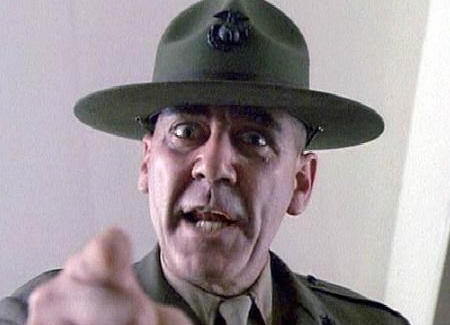
It probably lasted only a second of two before he picked the saw up, breaking the spell. Jim Parsons notwithstanding, the rant that ensued was pure R Lee Ermey.
I’m deeply proud that nobody ever got hurt on my watch but one guy did get injured during my tenure. He was on a ladder, working in shorts, using an 8″ fiber sanding wheel on an angle grinder. When he bounced it into his inner thigh, it opened a slice that had the gape of a hotdog bun. I arrived at work seconds after it happened. The slash was directly over the femoral artery; a tiny bit deeper and he would have bled to death within a minute or so. Fortunately, he had the legs of a soccer player and there was a lot of muscle to go through. Ironically, although he was home from the hospital within hours, he later ended up spending several days there anyway because he ignored the doctor’s advice to stay off his feet for a week and went to work tending bar that very night.
Now
So having being hardened in the flames of an art school workshop, you’d think I’d be preaching the gospel of safety everywhere and indeed, I generally do talk a good game. However, shooting the videos has shown me how badly I’ve been falling short on practicing what I preach.
Just today I snatched this grinder up off the floor to put it away and it turned on in my hand unexpectedly. How many times have I said “always pick up power tools like you’re going to use them, and make it a reflex to click the trigger.” I’d assumed it wasn’t plugged in because “there’s no plug nearby” and also forgot my own rule about always squeezing the trigger as you pick it up. A few seconds later when it got pressed accidentally, surprise! (BTW, the other reason to always click the trigger is to be sure that the trigger lock hasn’t been left on, which could cause it to start unexpectedly when you put the plug in the socket. Many a grinder or saw has skittered across floor or workbench because the trigger got left locked on.)
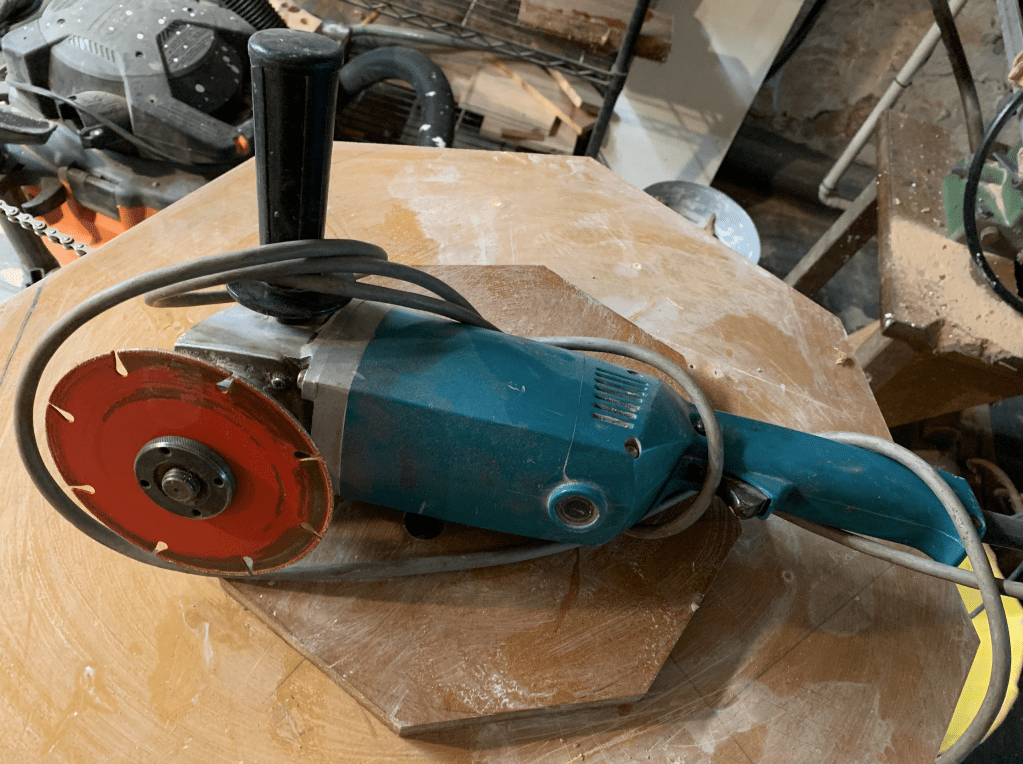
You know what’s even worse? The grinder was lying there because I’d been using it and had ended up tossing out an interesting video because I realized that the way I’d just showed myself using the tool was unsafe and stupid: (a) I was running it without a blade guard and (b) I didn’t have my earmuffs on because I was “just going to do it for a second.” I did have goggles on but know better. With a tool like this, you really want a full face-mask too. A grinder/polisher like this will throw the little wires that break off of a wire-wheel hard enough to embed them in you like porcupine quills–I’ve plucked plenty out them out of my arms and hands over the years. I really wouldn’t want to find out what a few grams of steel moving at that velocity feels like.
A few weeks ago, I wasn’t able to use a nice bit of a video on moving heavy stones because right in the middle I used an engine hoist in a way that I knew was risky. Knowing it was sketchy, I was prepared and well out of the way, but would I want my 7th grade shop teacher to have caught me doing it? Certainly not.
Here’s the thing: if you ask anyone who has been hurt with a tool if they knew that what they were doing was dangerous, they will almost always freely admit that they did. The surprise is that a large percentage of people will go farther and tell you that they were actually thinking about how stupid what they were doing was at the moment the accident happened.
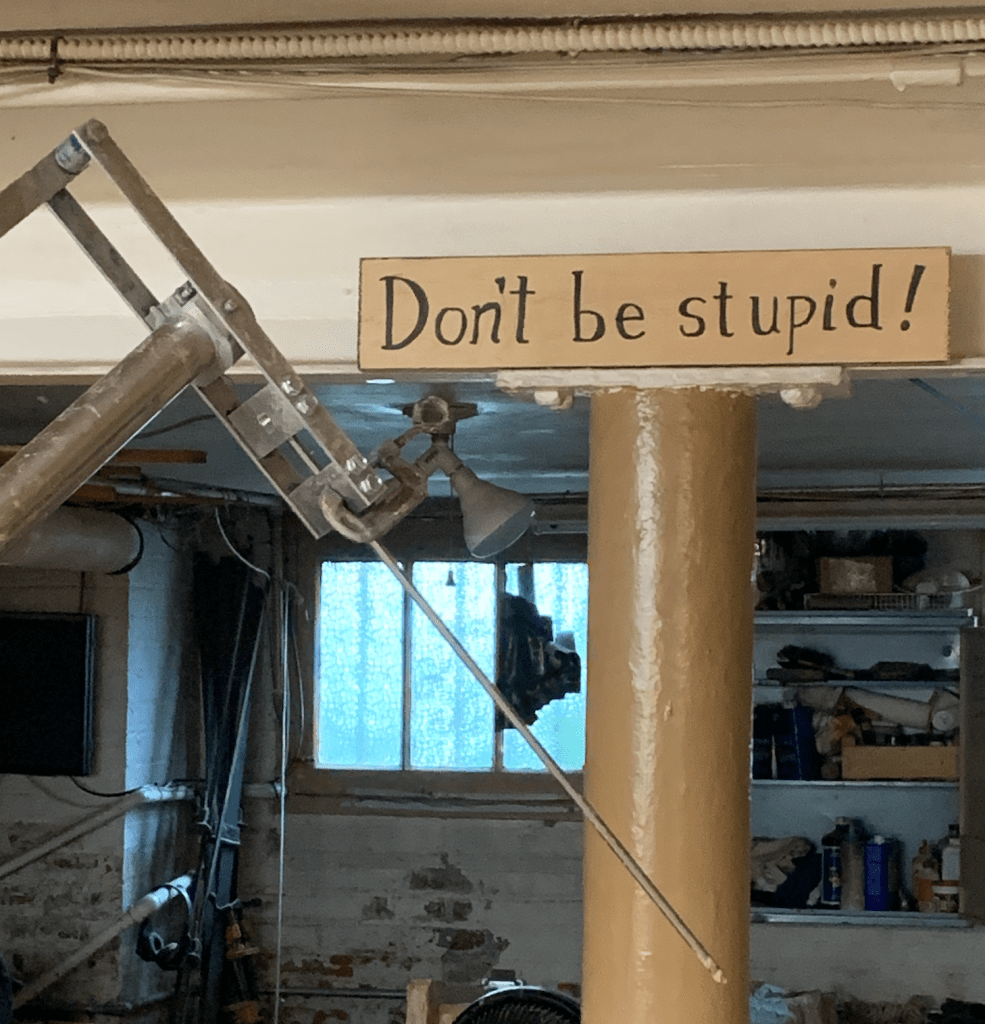
Someone, somewhere must have studied this phenomenon. Part of us knows that we’re doing something dumb and is warning us while the part in charge ignores the advice. That’s why I’ve had this sign up in my workshop for years. It’s not for guests.
 Sculpture Tech