By way of establishing credibility, here’s a brief bio.
I moved to New York to be an artist in January of 1980 after working in the sculpture department of the Corcoran School of Art in Washington DC for several years. This was long before the Corcoran became part of a mega-university.
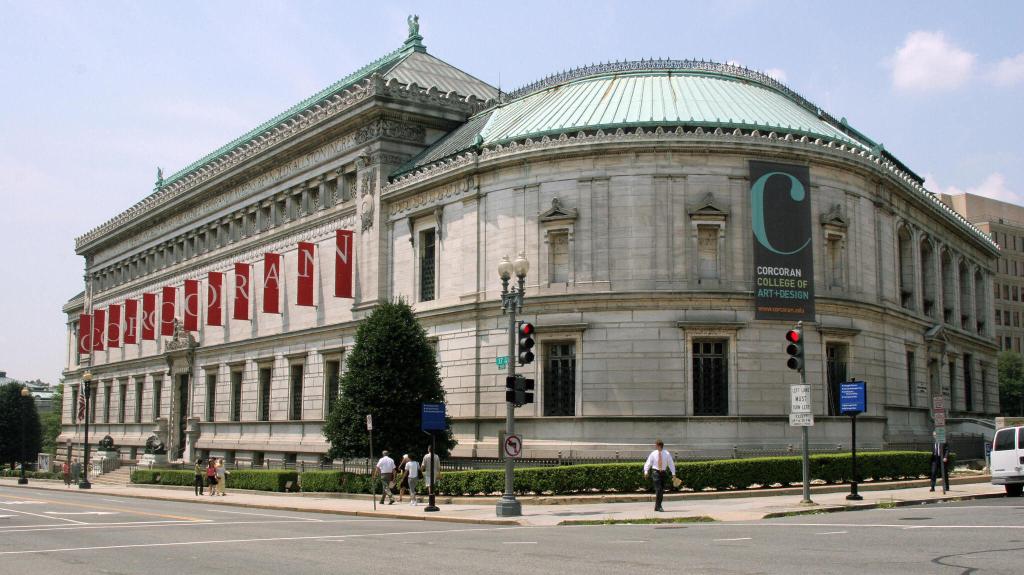
I wasn’t on the the faculty at the Corcoran. I’d been a student for a short time but when I couldn’t afford to stay, the dean, Peter Thomas, god bless him, made me an offer. I was no kind of artist yet, but I’d worked in manual trades for several years so I knew how to handle tools. He said we don’t offer scholarships here, so go ahead and quit, and I’ll hire you to run the sculpture shop. Hand out the tools, show people how to use them, and you can do your own stuff on the side. It’ll be better than being a student and we’ll pay you.
It was better and nobody in history ever got paid for having more fun. The real job description was “be the guy who knows how to make whatever it is.” It worked for the faculty too; it’s exhausting enough to do “crits” for a bazillion students; they rarely have the time or energy to roll up their sleeves with them too.
I knew a lot more about the mechanics than most of the students but far less than they in the aggregate wanted to know. Fortunately I had resources–a modest base of skills and a lot of people willing to help. Faculty, of course, but also people I’d worked with or worked for; there were some unusual students like David Logsdon, the childhood friend who introduced me to the place, who was a bonafide iron worker and the designer Bill Harvey, who already knew some offbeat odds and ends like how to cast aluminum. There was an old man learning stone carving in the general studies program, Bing Burner, who might still be the most skilled woodworker I’ve ever met. Bing loved to step in and show the kid how it’s done.
So it was three or four years of helping people make everything from giant minimalist constructions to traditional stone carving to wacky Rube Goldberg machines and in between, making whatever I wanted to make myself. It was a golden chance to experiment and hone the studio skills that you never need until you suddenly do. Moving things that weigh thousands of pounds, laying up resins, welding, bending wood, gluing up wood for big carvings, hauling tree trunks out of the woods. And of course, all the traditional skills of working in clay, plaster, wood, and stone. The biggest part of learning to make things is realizing that you can just jump in and do it, and that only comes with jumping in and doing it.
New York
New York beckoned. In December of the year I should have graduated, by sheerest chance, I heard of an apartment share in NY though a friend of a friend and I moved up directly, leaving my tools and equipment in storage. A few weeks later Bill Lombardo, who taught ceramics, decided to go too, so we split the cost of a van and we drove our stuff up together.
Friends from the graduating class started arriving in the city, and we were all hooking up with artists who were already there. I had a drafty, barely heated loft on Flatbush Avenue in Brooklyn, but I threw in with some friends and we bought a falling down pile in Park Slope. I had the vast and gloomy ground floor. The entire place was a ruin. You could look up from my space and see blue sky through the holes in the roof two floors up. In 1981, Brooklyn had less social cachet than Jersey City but on the positive side, it was still a place that semi-employed kids from out of town could buy property. Three of us split a $600 dollar a month, three-year mortgage and rented some dumpsters.
My 1/3 was huge with 13 foot ceilings and it was a place where no attainable volume of noise was sufficient to draw complaints. I called the cops one day to warn them that we’d be testing a cannon, lest the noise bring the bomb squad. The response was a one-word verbal shrug: “So?” Downtown Manhattan was the center of cool then but out in Brooklyn we had the space to build stuff, test cannons–whatever we wanted to do.
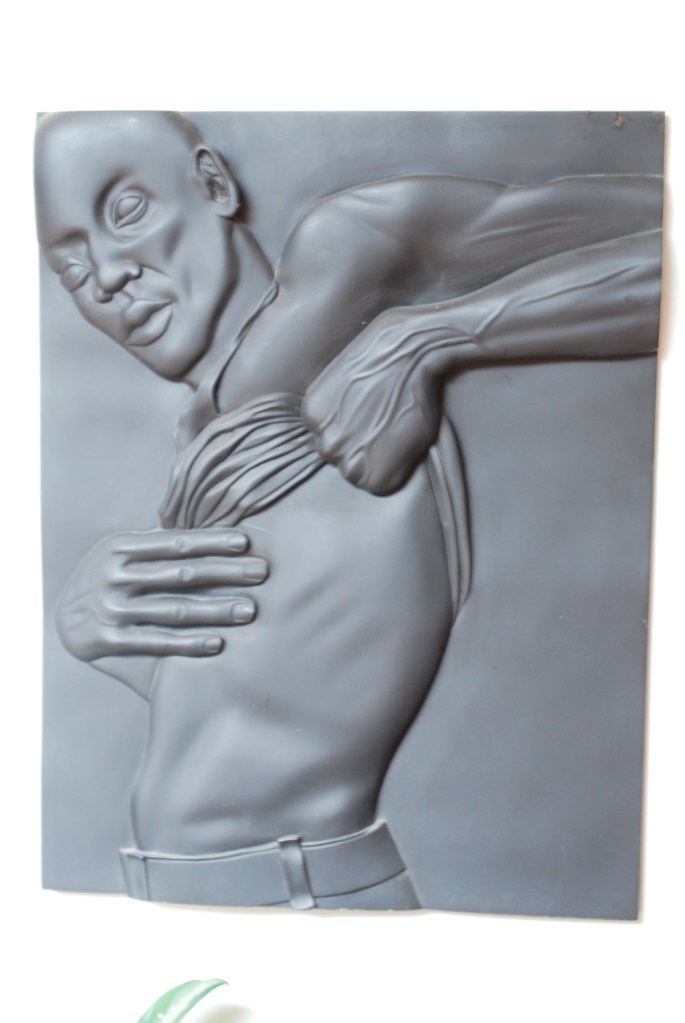
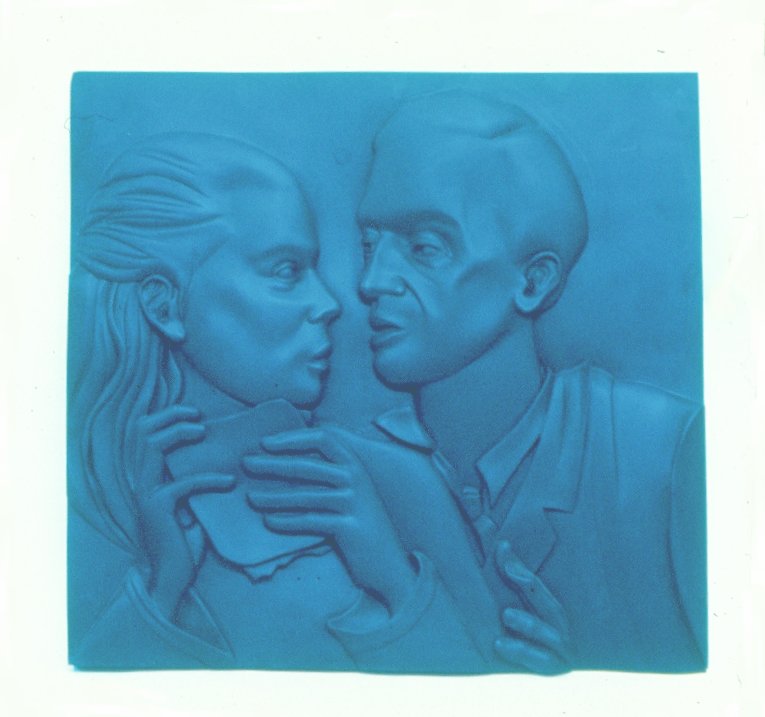
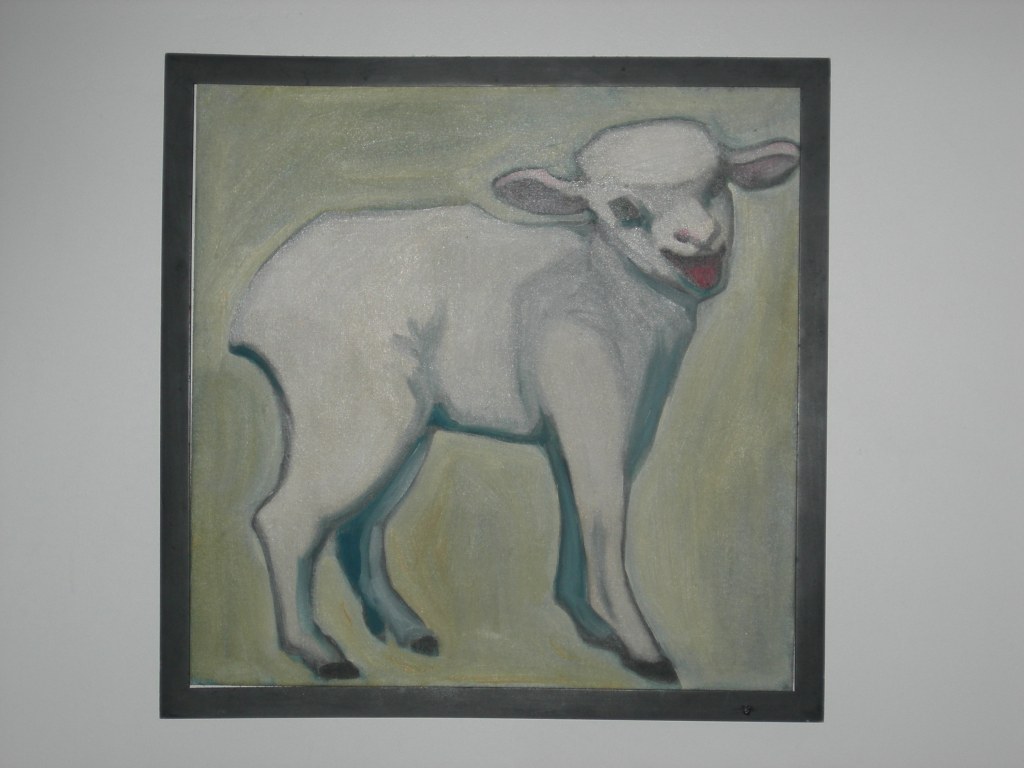
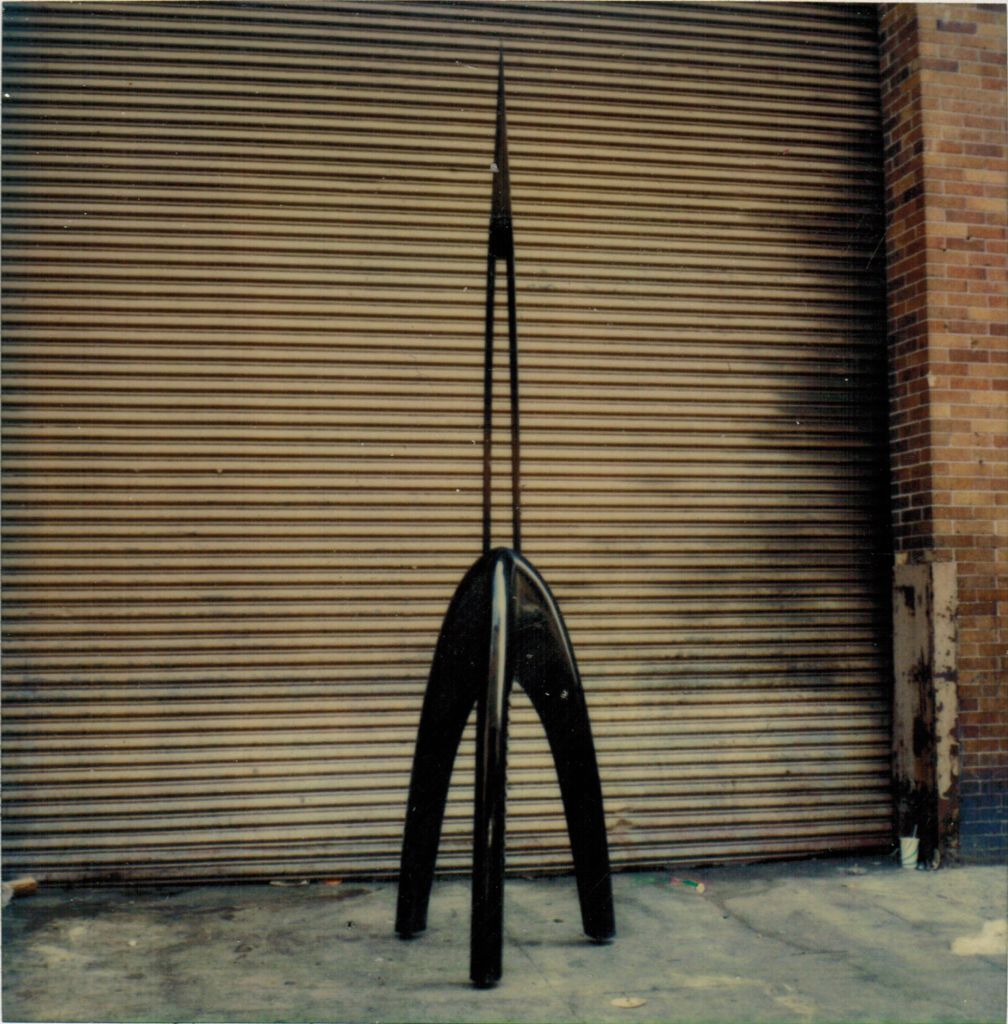
I was doing doing wood relief carvings and paintings like the ones above while making a living doing construction and cabinet making when the artist Gretchen Bender, who was one of the transplanted DC gang, asked me to help her execute a sculpture in lacquered wood. That GAB was once a sculptor is largely forgotten somehow.
We made the three legged piece above, and when her then boyfriend Robert Longo, who was the first of that crowd to hit pay dirt, saw it, his eyes lit up and he sketched something on a napkin and asked if I could build it.
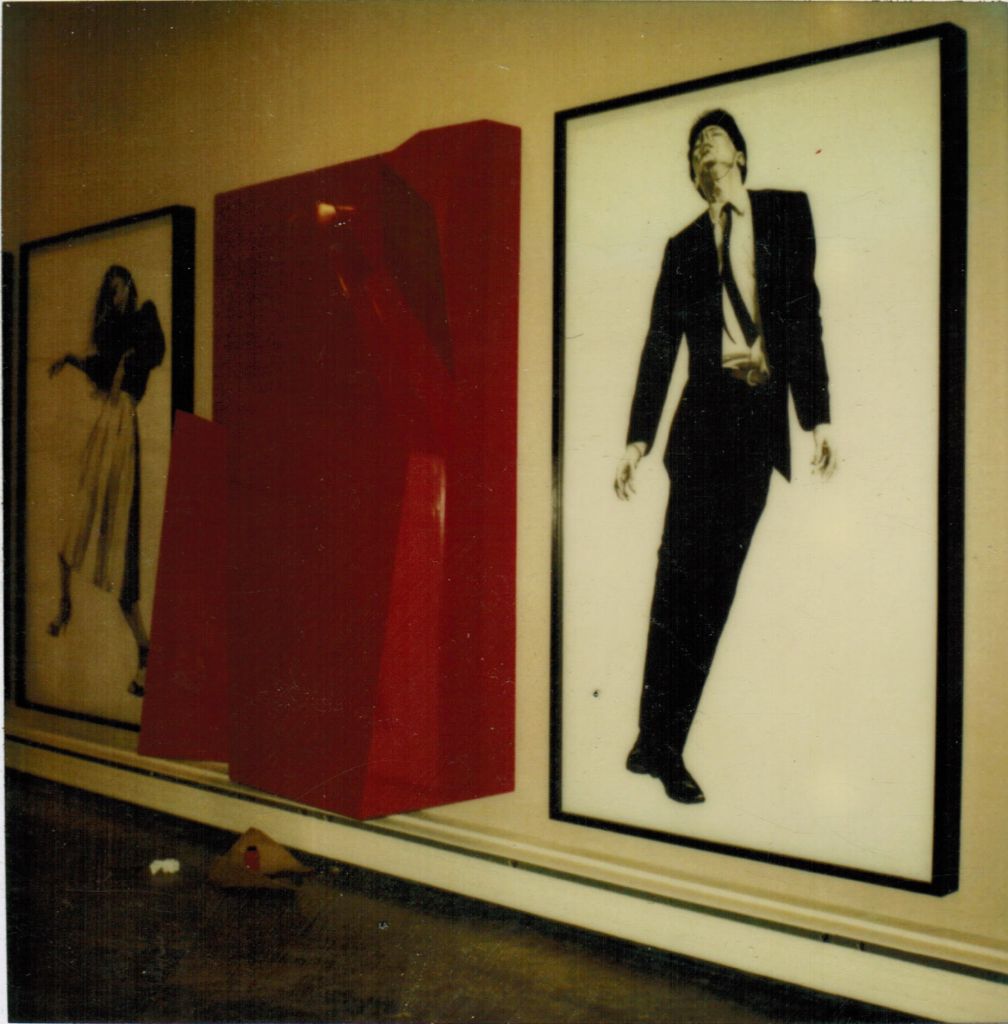
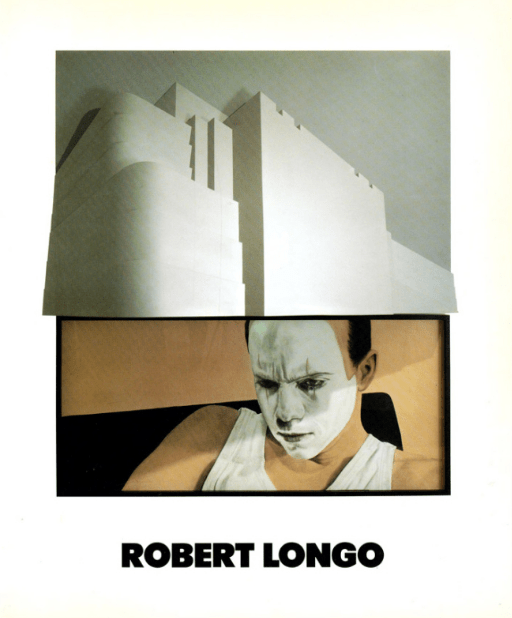
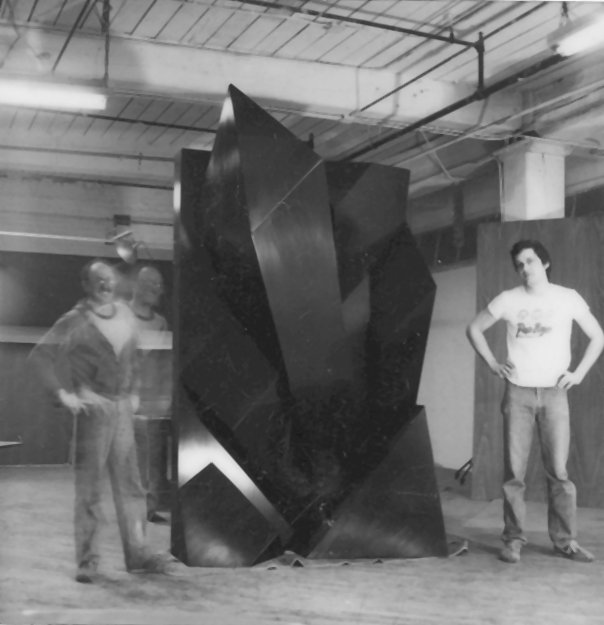
The red piece above was the result. It was the first of a long series of napkins. The ones above were typical. Eight or nine feet high or wide, often lacquered but also of steel, lead, aluminum, wood–all kinds of materials.
The artist Nancy Dwyer and I lived together on Sullivan St. in Manhattan in the early 80’s. She had been a painter, but she decided she wanted to build her painting out of industrial materials instead, so she got into it too. She was a different kind of artist, somewhere between conceptual and Pop. We produced dozens of pieces like the one below using countless materials from aluminum and Formica to industrial carpet. Nancy was more hands-on than most, generally in up to the elbows.
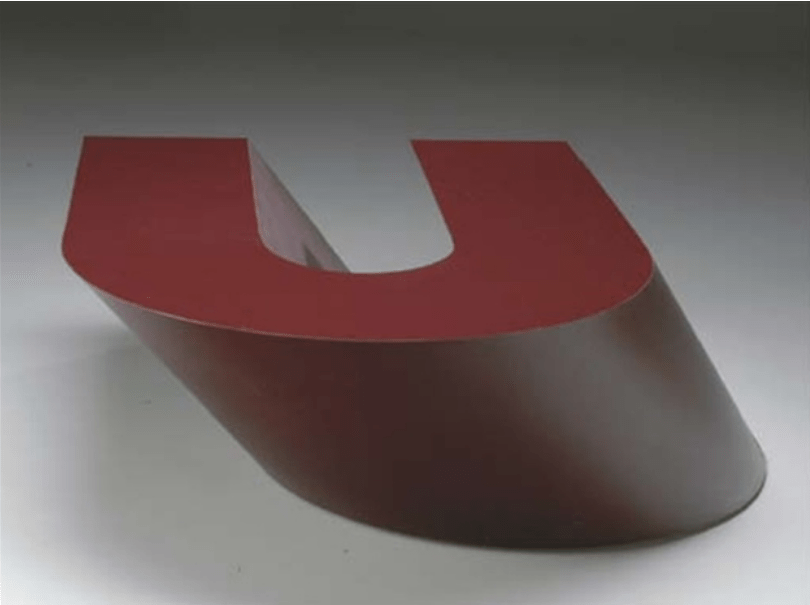
Other people started asking, and for a few years my studio was the go-to place for any crazy thing people didn’t know how to make, or didn’t have the space for, or simply didn’t have the time for. We did stage sets, furniture, cabinets, and mechanized pieces. A stream of trucks dropped off materials and picked up art work as well as furniture and the results of commercial projects in wood, plastic, metal, and other materials. The biggest piece that ever came out of the shop was a sixty foot tall wood and neon contraption built to lean on the NY Coliseum like a ladder.
The shop was a great place for occasional employment for artists with more skills than sales. The old DC crowd often did short stints. David was the best welder. Peter Fleps helped out with wood construction. Laura Emrick was always up for any project involving tools and/or fire.
The eighties were a crazy time for artists, flooded with Regan era money, it was the seed from which today’s quasi-corporate art world grew. It was as if a finger would come down out of the sky and tap someone and overnight they would be semi-famous. A few people even got famous without the semi. Naturally, everyone wanted to get tapped but like today, an artist could be all over the magazines and never have enough sales to give up their day job. Art has the same career dynamic as basketball. Millions of kids start out playing. The best one or two players in your neighborhood might make it onto one of the thousands of college teams. Each of those thousands has scores of players, but there are only a few dozen openings in the NBA each year. Another handful become coaches or managers but everyone else ends up getting a real job.
Taking A Little Break
My own wood sculptures were just starting to sell a little when I discovered computer science in the mid 1980’s. I bought the first computer I ever saw.
It was mesmerizing. I was obsessed understanding how computers worked so I finally got myself a New York State high school equivalency certificate and enrolled at Hunter College. (I don’t remember how I had wheedled my way into the Corcoran–it had to have been fishy.) I kept the studio going for the next six years while I did a BS in computer science and then an MS at Columbia.
The studio business drizzled away just about the time I got my last degree. By then programming was no longer a lark; I was working in a research lab and had gotten married. Dena already had a child, and we quickly had a couple more, so suddenly I had a wife and four children. But I kept making art and plenty of other things, like a boat.
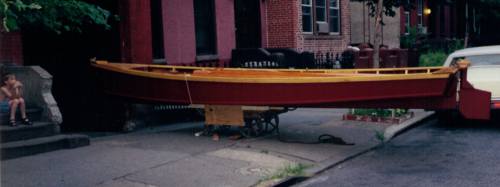
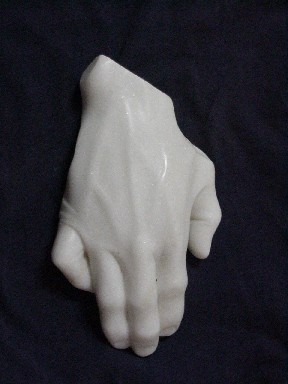
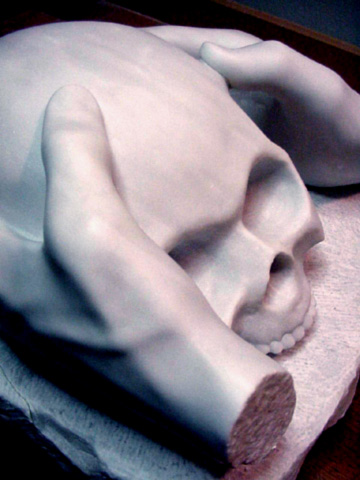
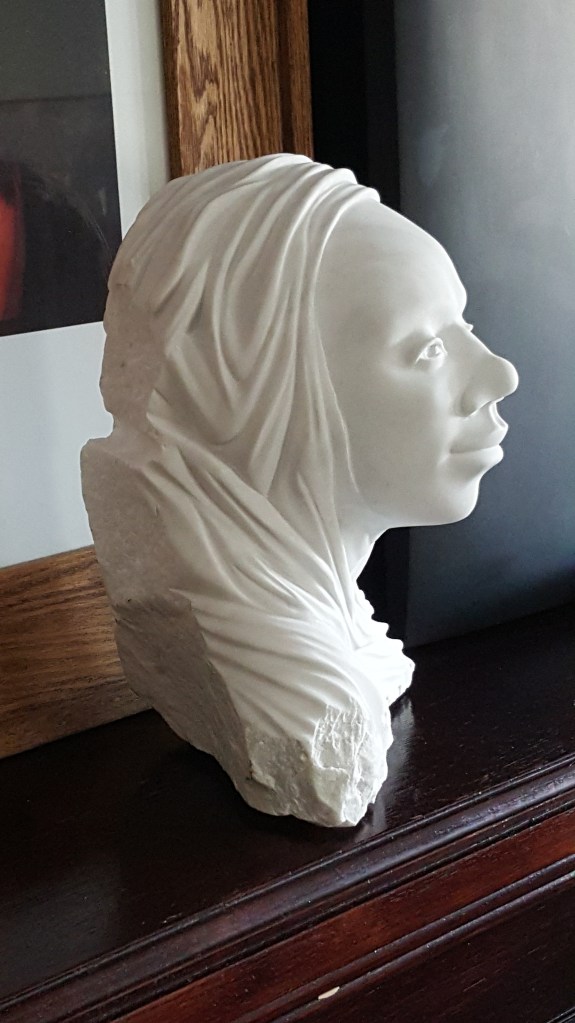
I’ve gotten more interested in sculpture in the round and in stone recently. Carving stone, but also the more exotic techniques: pointing machines, pointing with three compasses, enlarging machines, etc.
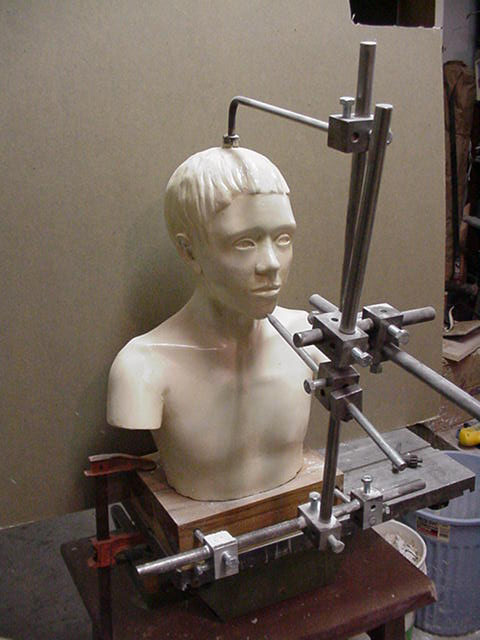
Below is a classic pointing machine made in the workshop. It’s shown hanging on three fixed points on the original. There is a stop on the pointer that is just touching Dodge’s chin is locked down so that the pointer can be withdrawn and replaced in exactly the same position. The next step would be to withdraw the pointer, then transfer the frame to three corresponding points on the block to be carved. If you’ve set up correctly, the pointer will be blocked by stone before it is fully inserted. You chisel away the stone until the pointer can be fully inserted, but no farther, leaving that point in the block established.
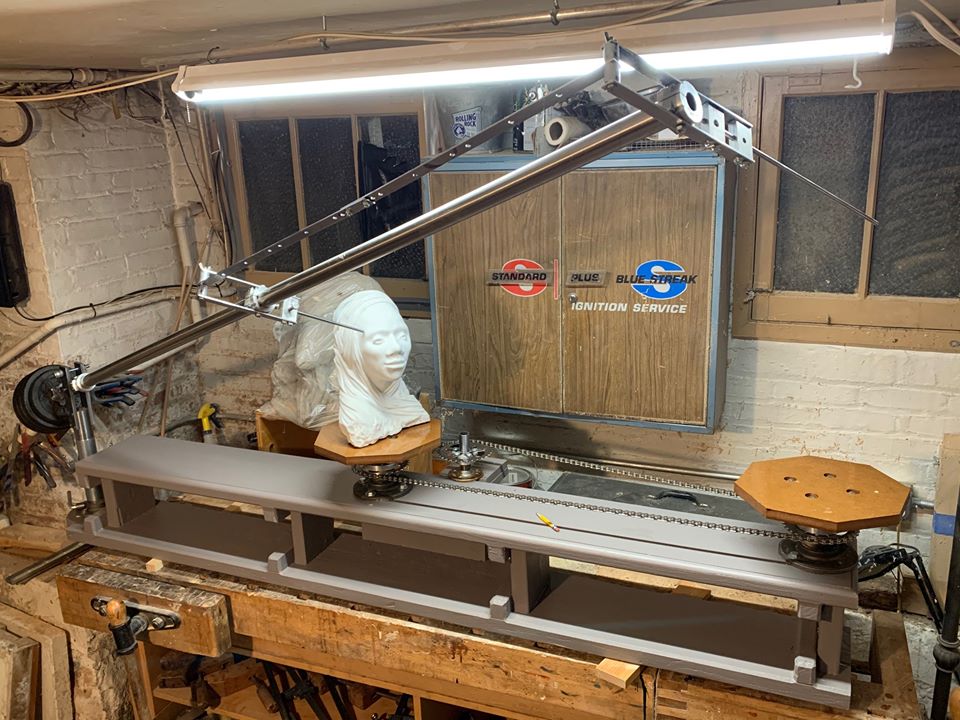
Above is a shop-made enlarging machine still sitting on the workbench. It’s a 3-d pantograph. The rod touching the model’s temple is projected into the same relative position over the far platform, in this case it is set up to enlarged by 2X. The rotating octagonal platforms are linked by a chain so they turn in sync for access to all sides of a piece. This would typically be used make a full-size clay from a smaller plaster original.The marble piece is just there as an example.
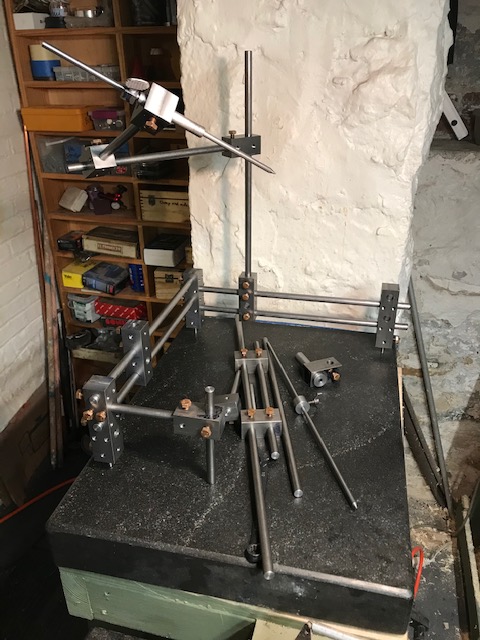
Below is a copying frame. It’s function is the same as an ordinary pointing machine except that it the three resting points are on the tables, not part of the original and the target. This is also made in the shop. It’s set up here for a small piece, but with larger rods you could comfortably use it for a life size figure.
I make a lot of hand tools. This gets to be almost routine–you want a particular weird shaped carving knife, why wait for Amazon if you can make it in a couple of hours. The ax-like pick for stone would be very hard to buy–the only other one I know of is illustrated in Vasari.
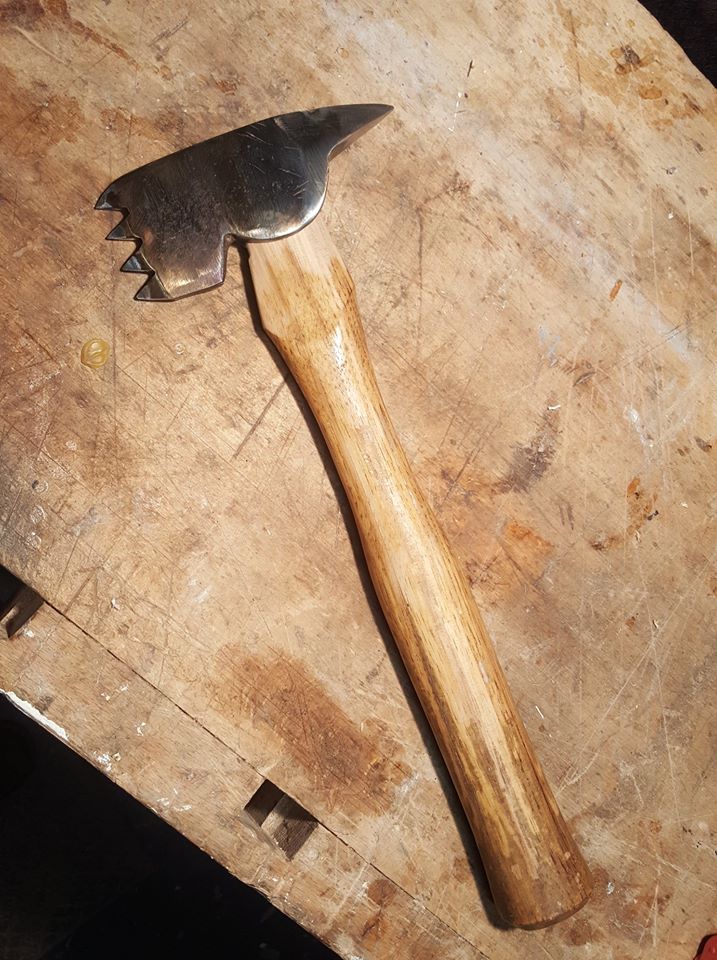
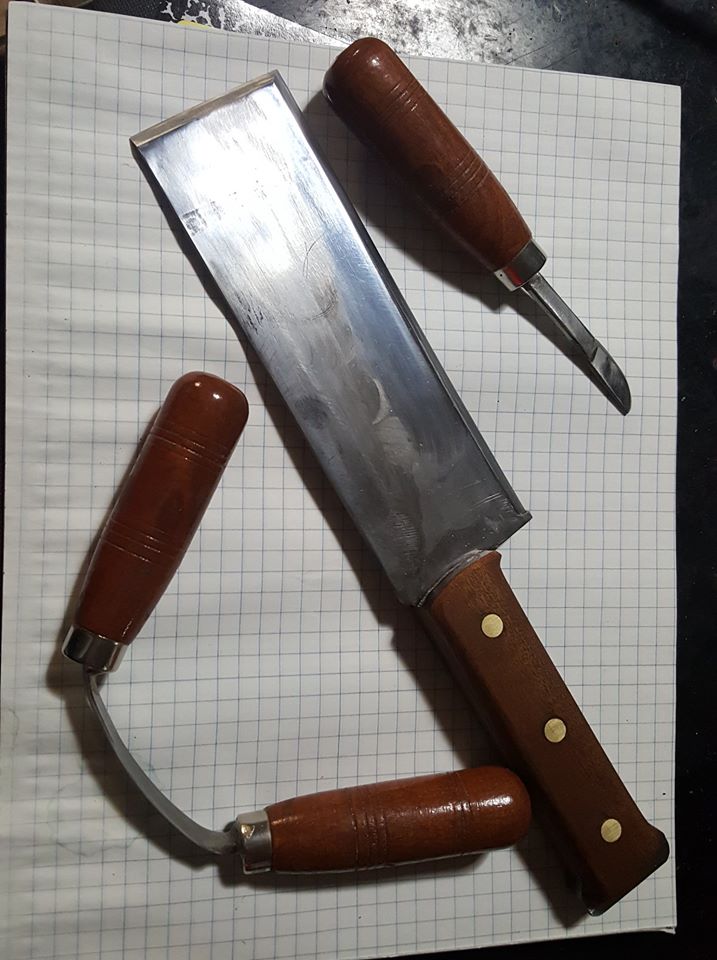
Below are a little draw knife, a chisel-knife, and a small carving knife. I make knives like this routinely as needed. It’s quick and easy enough that you can just try something to see if it works. If not, grind it into something else or toss it.
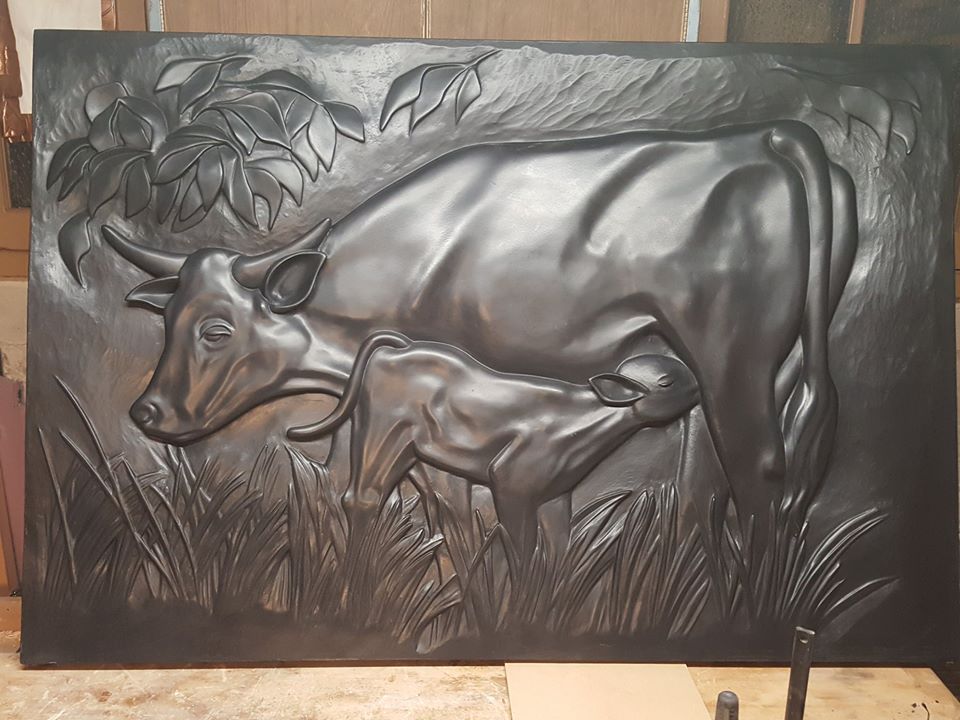
And of course, there are still wooden sculptures to make, some painted, some natural. The relief of a cow and her calf is about four feet wide. It’s still on the bench in this picture. It’s since been framed.
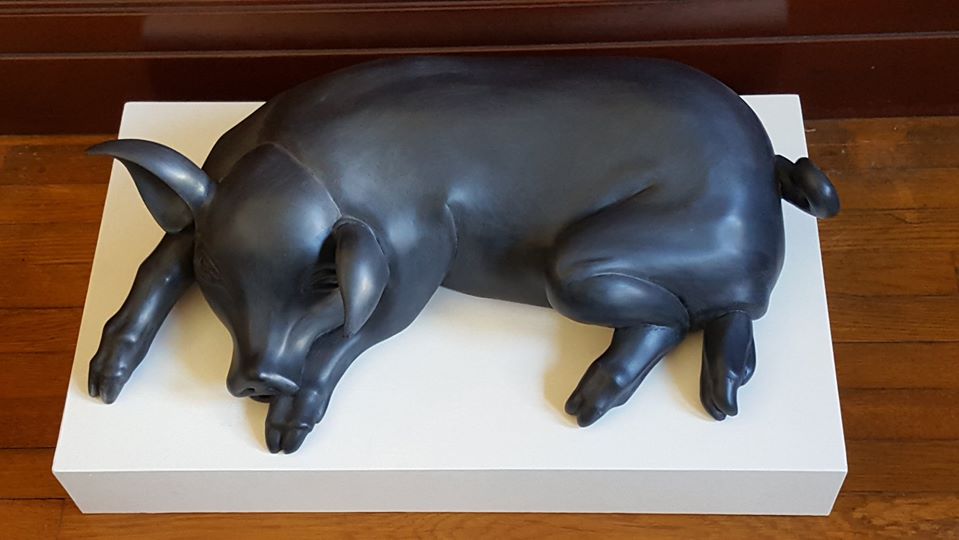
The piglet is life size.
The lamb, shown here drying in the sun, is also painted.

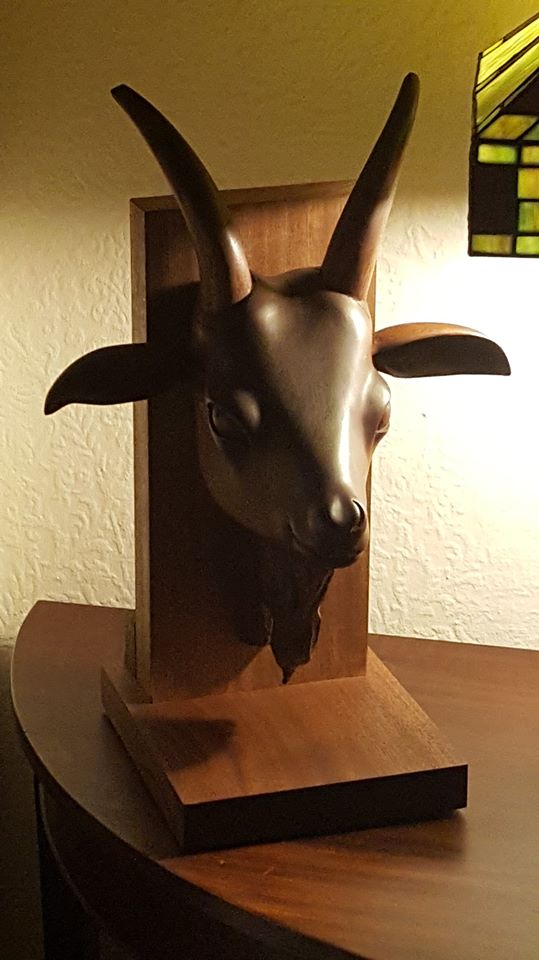
This goat has a natural finish–it’s sapele wood finished with linseed oil, life size, give or take.
 Sculpture Tech
Great story Pete—and sweet to see the lamb painting that used to be in Ed & Nick’s bedroom—keep on keepin’ on amidst the wreckage!
LikeLike